Showing posts with label japanese. Show all posts

Jun 14, 2016

Not Your Usual Kind of Ryokan- やすらぎの里(高原館)

For all health conscious ladies (and gentlemen), you may wish to embark on a different travel route in Japan. Different from the usual ryokan which offers onsen, good food (and huge quantity) and a huge stylish/ 和風 room. This ryokan is for health buffs who came for the common purpose: to be healthier or slimmer.

I've always wanted to give such ryokans a try after I read about it from Twitter and Naoko Takagi 高木直子's manga (or picture book?), I decided to plan a trip there. I chose やすらぎの里 (高原館), as recommended by Takagi sensei. There are 3 branches in all.

So what's different?

Room
Unlike the usual hotel room or ryokan room, my room for one is actually more like my bedroom in my Japanese home. It is furnished like a regular Japanese room, and comes with a balcony and genkan. I could actually hang my clothes up to dry in the balcony.


TIP
There are two washing machines provided, so you can do all your washing over there at no additional costs. Drying costs ¥50 per round though. But then since I could dry them under the sun so I didn't use the drying machine at all.

At first there was some issues with the payment as guests have to make payment before the stay, probably because it was really popular and the stay isn't cheap. (Costs about ¥64000 for my 3-night stay, single room, detox course) But in the end as we were unable to resolve the overseas bank transfer issue, they allowed me to make payment upon checkout instead.

Classes
Unlike normal ryokans which provide accommodation, onsen and gorgeous food, this alternative ryokan (some call it a 断食道場 which literally means a training camp for fasting) provides various classes. We follow a schedule, rather strictly, as you probably already know Japanese are very punctual. There are about 2 exercise classes, both before meals. We have yoga classes (yoga mats are provided) and simple workouts outdoors. We also have interesting workshops like "How to do lymphatic massage", "How to eat properly" and meditation classes. The owner also came to give a talk on how to maintain a healthy lifestyle. His tip? We do not need to make a big change in our lifestyle,as these big changes are usually not sustainable. We just need to make bite-sized changes to our lifestyle and slowly we can see a change.


Relaxation
I think my metal health was at its peak at やすらぎの里. I woke up naturally to the chirping of birds or rays of gentle sunlight. I could do my morning reading or squirrel-watching in the small garden right in front of my room. This is what city life can't offer.

In addition, they have a hot stone sauna room for three, one indoor onsen pool, one outdoor onsen pool, lots of reading material (in Japanese though), 2 foot baths (different aromas every day) and massage chairs for our usage.

Alternatively you can just watch TV in your own room too. The TV size is quite big. :p

For those willing to pay more, there's a massage chair in some single rooms.


Food
If I can only share about the one thing that has changed for me, that would be learning to appreciate food. I eat slower now. Colleagues would know that I often gobble up my food in order to buy time to do work. Lunch time at work can be as short as 15 minutes, including queuing and buying of food.

Food seems to be so exceptionally delicious here. Especially their salads! I took down some of their recipes, and hope to replicate them at home. :) Mmm but to be truthful, I am unsure if it was because we follow a strict diet regime, so when it was meal time we were actually pretty hungry and food just tastes exceptionally well even though they are the healthier options. You know, less oil, less salt, less sugar. When I finally had fish on my last breakfast there, it tasted so good, I can almost gobble down the bones. LOL.

But then we have to give them credit, as all the sauces are prepared by the crew. They didn't use the usual prepackaged stuff. So that is perhaps the secret to mouth-drooling healthy food.

The volume and variety of food increases with time. I started with just salad and soup. Here are some photos of my detox course (the ones with more volume and variety).


Sight-seeing
We are free to leave the ryokan and classes are not compulsory too, so we went exploring in the afternoons. The staff recommends walks around the area (immerse yourself in nature, flower viewing etc), a trip to Akazawa spa, mountain hiking at the nearby hill 大室山, leisure walk around the lake etc. I went to visit the 大室山 and 赤沢日帰り温泉館. The nearest bus stop is about 10-15 minutes walk away. You can take the bus from 伊豆高原 station bus stop 1 too.


Crater on top of the hill. You can even try archery in the crater.

TIP
It can get rather cold on the hill. The wind is strong too. Remember to bring a cardigan with you.

If you're a onsen lover like me, then you have to visit 赤沢日帰り温泉館. Gosh, the view is awesome! Imagine an infinity onsen pool that overlooks the sea and mountains. The huge indoor pool, rotenburo (outdoor pool) and even sauna room all have access to that view. Isn't that awesome? If that's not enough to tempt you, they are well-stocked with DHC products, and there are 2 special DHC enhanced onsen tubs.

TIP
There's a free shuttle bus from 伊豆高原 station at the Yamamo Exit. Look out for a small blue bus. They also provide free return trips to the station.

TIP
They have a shuttle bus service to fetch us from the station at 13.10 every Friday (the day we check-in) to the ryokan. There will buses that fetch us from the ryokan to the station at 10.40am every day during our stay there too. However they do not have daily shuttle service from station to ryokan, so make use of the local bus instead.

In December 2017, I was back for a second visit. And this time i covered two new places. Here's how's you can get there:

Izu Teddy Bear Museum


This small quaint museum is famous for the Totoro exhibition. First storey showcases the teddy bear collection, while the second storey houses the Totoro exhibition. It is now into Part 2 of the exhibition phase. It's very family friendly. When I visited, there were several other Japanese families with young children's (read: toddlers). Hence if you would like more time to take photographs with Totoro and friends, I would recommend that you go on a weekday instead.


This is an actual "bus" you can take pictures inside it!


Ticket price
The ticket costs 1080yen, but you can get a 100yen discount when you pre-purchase the tickets at the vending machine at the 伊豆高原 Izukougen train station. That particular vending machine also sells discounted tickets for other tourist attractions. Do check this out before you proceed with sightseeing.


How to get there
It's within walking distance from the train station. There are some slopes, so a stroll to the museum will take about 20 minutes.
Official website on how to get there.

海洋公园
When you are in Izu, you have to see the Izu shoreline. I wanted to see the sea so much, that I waited an hour for the bus. Take the bus from bus stand 2 at the Izukougen train station bus stop. The bus only comes every hour though, so do take note of the timing. The ride is about 10 minutes. Do watch out for the LCD screen in the bus. The bus stop you are alighting at is 海洋公园. This is the same bus stop that you alight if you intend to hike to the Jogasaki Cliff.

I really love the view of the sea here. I could sit here all day and watch the waves crash upon the rocks, the seagulls circling the sea...


Results
That's probably what you have been waiting for, so was there any improvement after my 4-day-3-night detox trip? Well I definitely feel better. It was pretty stress-free over there, and everyone was friendly and nice. I lost about 1.5kg, and my body fats went down by a grade. And my body age went down by 1 year old too.

If you're adventurous and would like a different kind of stay, you can consider this course. I really enjoyed my time there, and would love to go back again, some time in future :)

Mmm but there's a prerequisite though, you would need to know Japanese to fully enjoy your stay there, since there's no one who is conversant in English over there. Ganbatte ne!

Sep 14, 2015

Makan Time at Kanda Wadatsumi ~ Shizuoka Special

Unagi, mikan, tomato, green tea, wasabi.... ah and unagi pie with ice-cream! *Drools*


If you are craving for Shizuoka food like me~ you should head down to Kanda Wadatsumi! From now to 26 September 2015, they will be offering authentic Japanese cuisine, with airflown produce from the Shizuoka prefecture.

They don't offer unagi pie dessert yet though. You can get the unagi pie goodness at Shunkado Unagi Pie Factory (Japanese)/ (English).

Thanks to the Shizuoka Prefectural Office based in Singapore, I get to try the dishes first-hand together with other lucky invited guests :)

First, let me introduce to you the most salmon-alike dish:


Don't they look like salmon sashimi? The texture is very similar, but the taste is less fishy. Guess what fish is this? It's the rainbow trout. They are farmed at Fujinomiya, the land of Mt Fuji. Therefore, the water used to breed them are all from Mt. Fuji. I highly recommend this to you if you usually don't take fish sashimi as you can't really stand the fishy taste. Enjoy the same goodness minus the fishiness.

Next introducing you to my most favourite dish of the day is the Deep Fried Rainbow Trout with Seaweed Glaze~


The seaweed glaze blends perfectly well with the deep fried rainbow trout. Wonder how they concoct the sauce?

My next recommendation is Shizuoka's tomato! Known as Amela Tomatoes, they are no ordinary tomatoes. To me, they are more like fruits, you know like melons, strawberries, and not vegetables, as you can just eat them on their own. It oozes sweetness. They are so famous for their sweetness locally (in Japan) that they appeared on TV programmes. That's how I came across them in the supermarket. Usually I just buy the cheapest to save up for domestic travel. From then I was a converted Amela Tomato fan. I missed Shizuoka's tomatoes terribly since I left Japan. Singapore doesn't (has yet...) import tomatoes from Shizuoka. But I heard the exporter is now working with suppliers to bring in tomatoes~


Once they are in, I can't wait to make this snack:
1. Slice tomatoes (not entirely)
2. Cut preserved plums into strips
3. Put a slice of preserved plum into the cut tomato such that it now forms the tomato-plum sandwich!
4. Refrigerate and serve cold

Probably lesser known to all gaijins, like us, one of Shizuoka many produces includes tuna. Try the Seared Albacore Salad, whereby albacore is a type of tuna:


This... you may have known. Shizuoka in particular Izu area is famous for sakura shrimp. I think the popularity of sakura shrimp is picking up in Singapore food scene. Now sakura shrimp sushi, etc, are more commonly available.


Sakura Shrimp Sushi from Ryoshi Sushi Ikeikemaru. Ryoshi Sushi imports sakura shrimp from Numazu (which is in Izu).

At the food tasting session, we tried Sakura Shrimp Claypot Rice.


It tastes a bit dry for me...

But I love the Sakura Shrimp Tempura with Assorted Vegetables. Sakura Shrimp goes very well with tempura vegetables. I would like to try remaking this dish at home!


And of course, you have to end it with melons as desserts!

Introducing you the Musk Melon of Shizuoka, known as Lion Melons. They easily cost twice and thrice the price in Singapore. So I will always handcarry one when I am in Shizuoka Prefecture~ Their melons are juicy sweet, and their skin is thinner than our tropical melons, so you get more melon meat, more juice, and more sweetness. I once had a melon for 2 dinners. That's how satisfying it was. :P (those were the days, when I lived alone in Hamamatsu.)


They offer Lion Melons in Kanda Wadatsumi too~ Go try it!

Bon Appetit~

How to get there?
Kanda Wadatsumi
50 Tras Street
Singapore 078989


Nearest MRT station: Tanjong Pagar Station
Nearest MRT exit: A

Kanda Wadatsumi holds various food fairs depending on seasons, as they are strongly supported by the Zengyoren Japan Fisheries Association, which represents all coastal fishermen in Japan. Do check their website/ facebook page for promotions!

Aug 10, 2015

How to make Braised Radish (Daikon no Nimono)

Daikon no Nimono 大根の煮物 is one of my favourite radish dishes. It's a flavourful side dish that goes well with rice. I've always wanted to learn how to make it. Thanks to Tjin Tjin, I managed to get the recipe for this dish. The following recipe is my adaptation of the original recipe from the NHK website.


Ingredients needed

  • Half a Daikon/ Radish
  • Rice
  • Water
  • 6g of Bonito Flakes
  • 3cm by 5cm of Kelp
  • 1 tablespoon of soya sauce/ shouyu
  • 2 teaspoons of mirin

TIP
Depending on your preference, you can adjust the amount of soya sauce. My version is not as salty as the Japanese version.

Method

Rice water
1. Wash the rice.

2. Collect the water that has been used to wash the rice. I used the water that was used for the second and third rinse. Ensure that the volume is enough to cover all your daikon pieces when you boil them.

Dashi
1. Boil water.

2. Add bonito flakes and kelp into the boiled water and continue to boil the mixture.

3. Sieve out the contents, leaving the dashi soup.

Daikon no Nimono
1. Boil the rice water.

2. Peel off the skin of the daikon and cut it such that they are about 2-3cm in thickness.

3. Cut a cross across both sides of the cut daikon.

4. Add the cut daikon pieces into the boiling rice water. Boil till the daikon becomes softer.

5. Pour away about half of the rice water.

6. Add the dashi soup to the mixture.

7. Add soya sauce and mirin to the mixture.

8. Continue to cook the mixture for about 30 minutes.

And it is ready to serve~

Dec 13, 2014

How to make Ebi No Umani 日本版的醉虾

Thanks to JETAA Singapore, I have learnt 3 new Japanese recipes (^_^). Thanks, Keiko-san, for teaching us these recipes!

This year's cooking workshop focuses on osechi, which is a set of special dishes that Japanese make to welcome the New Year. There are many types of osechi, and for this workshop, we learnt 3: Kouhaku Namasu 紅白なます,Ebi No Umani 海老のうま煮 and Chukuzen Ni 筑前煮.

Ebi No Umani 海老のうま煮, somewhat reminds me of a Chinese dish, Drunken Prawns 醉虾, so that perks up my interest to learn how to make this.


I revised the given recipe, to make dashi soup from raw, instead of using powder.

Here's how to make the Japanese version of Drunken Prawns 日本版的醉虾:

Ingredients needed

  • 8 Prawns
  • 500ml of Water
  • 4cm by 3cm of Kelp
  • 6g of Bonito Flakes
  • Boiling water
  • 30ml of Sake/ Rice Wine (for soaking)
  • 50ml of Sake/ Rice Wine (for cooking)
  • 100ml of Mirin
  • 1 toothpick


Method

1. Cut the tips of the prawns' heads and tails slightly.

2. Using the toothpick, poke through the shell at the second or third segment of the prawns' bodies, and pull out the dark veins.

TIP
Compare and contrast the above deveining of prawns with the Chinese method. For the Chinese dishes, we will slit the back of the prawns using a knife and then pull out the dark veins.

3. Soak the prawns in 30ml of sake.

4. Add boiling water to the mixture, just enough to cover the prawns. Leave it for 10 minutes.

5. To make dashi soup, add kelp and bonito flakes to 500ml of water. Once it boils, and the mixture turns brownish, sieve out the kelp and bonito flakes to retrieve the dashi soup.

6. Add 100ml of mirin and 50ml of sake to the dashi soup. Stir well while cooking the mixture. Cook the mixture till boiling point.

7. Add the prawns into the above mixture. Cook for 2 minutes.

8. Serve the prawns dry.

TIP
This dish is meant to be served when cooled, so it would be good to make this dish first before others, so that it has time to cool down.

There you go, do you find any similarities and differences between Ebi No Umani and Drunken Prawns?

Hope you enjoy the Japanese version of Drunken Prawns as much as I do. (^^) Bon appetit~

Other recipes of homemade Japanese food which you may like to try:


Dec 11, 2014

How to make Teriyaki Salmon

This is an improvised recipe which I learnt in JETAA cooking class last year. The recipe was originally for the making of teriyaki chicken toppings for the teriyaki chicken pizza.

After several attempts to perfect the taste, here's the recipe for teriyaki salmon. I could proudly say this is one of my most confident dishes, at least, taste-wise. It is not easy to capture a beautiful shot though.


Ingredients needed


  • Salmon fillet with skin
  • Cooking oil


TIP
Give some cuts to the salmon fillet so that it will be cooked faster.

Teriyaki Sauce

  • 100ml of Mirin
  • 15ml of shouyu/ light soya sauce
  • 1 teaspoon of sugar


Method
1. Mix the ingredients for the sauce.

2. Add the salmon fillet into the mixture, and leave it in the refrigerator for at least 3 hours.

3. Add cooking oil and lightly pan-fry the salmon fillet (skin facing downwards).

4. Add the mixture that the salmon fillet is marinated in, and sauteed till cooked.

TIP
Be careful not to overcook the salmon fillet.

5. Ready to serve~

There you go, a very simple recipe for teriyaki salmon.

Other recipes of homemade Japanese food which you may like to try:

Jun 20, 2014

Managed to get your hands on the first 嵐 event in Singapore?

Arashi 嵐, my favourite JPop group, is finally coming to Singapore... on the big screen.

Nevertheless, this is the first time Johnny's has held an 嵐 event in Singapore.

"I hope the Shaw server can take the traffic..."

And then the battle for the tickets for the public screening for 嵐ワクワク学校 (Arashi Waku Waku Gakkou) starts this afternoon.

12.01pm logged on to Shaw Website.
- keeps hanging, keeps refreshing -
12.20pm managed to select seats.
12.21pm OMG! I was kicked out by the system! I was already at the payment stage!!!
12.24pm Keep refreshing. 嵐ワクワク学校 page is not appearing.

Verdict... 嵐ワクワク学校 tickets sold out in 24 minutes?!


***Fortunately, Lady Luck was smiling upon my two friends... 托他们的福,我也得了一票!***

Wonder if Shaw will add another screening? It is really lucrative. A theatre's worth of $50 each tickets sold within half an hour.

Wonder what the battlefield will be like if 嵐 ever has an event in person in Singapore. Will the tickets be sold in seconds regardless of price???

Nevertheless, I'm looking forward to watching 嵐 on the big screen! :D 楽しみ!

Jun 3, 2014

How to make Zaru Soba

Another favourite for summer~ and for all of us living in tropical countries~ Zaru Soba. "Zaru Soba" is loosely translated as "Cold Soba noodles with dipping sauce".


It is a very simple dish, and you can prepare it under 30 minutes. (^-^) Here's how:

Ingredients needed

Soba

  • Soba (Quantity- as you like)
  • Sesame oil (for flavour)
  • Boiling water


Tsuyu/ Dipping Sauce

  • 250ml of water
  • 1.5 tablespoon of soya sauce/ shouyu
  • 1 tablespoon of sugar
  • 1.5 tablespoon of sake
  • 6g of bonito flakes
  • 1 piece of konbu (approx 7cm by 3cm)


Garnishing

  • Sliced seaweed
  • Sliced spring onion


Method

Soba

1. Add a few drops of sesame oil to the boiling water.

2. Boil the soba. Remember to stir them to prevent them for clumping together.

3. Drain away the water to retrieve the soba.

4. Run the soba under cold water to cool it.

Tsuyu/ Dipping Sauce

1. Add all the ingredients into a pot.

2. Boil them.

3. Drain away the bonito flakes and konbu.


Ready to serve

To serve

1. Add garnishing to the soba.

2. Dip soba into the tsuyu/ dipping sauce for taste, before eating.

Enjoy~

Other recipes of homemade Japanese food which you may like to try:

Mar 1, 2014

Finding Japan in Singapore ~ Singapore's 1st Cat Cafe ~ Neko no Niwa

Cat Cafes... I have heard of many in Japan and Korea, but I have never stepped into one when I was in Japan. That's because I was more of a dog lover rather than a cat lover. I realise how wrong I was when I visited Singapore's first cat cafe, out of curiosity...

Tucked along the street along Boat Quay, along with the seafood restaurants, stands Singapore's first cat cafe. It is located on the second floor of the shophouse unit. So do look up and watch out for the prominent metal signage at the shophouse, when you are looking for the cafe.


Cafe Cats, also known as Neko no Niwa 猫の庭, houses 13 cats. They were all adopted cats, saved from the streets and shelters. Under the care of Neko no Niwa, you won't be able to find a glimpse of their painful past. They are now healthy, fit and have a shiny smooth coat of fur.

The cafe is also very clean and well-kept. There are toys and structures for the cat residents to play with, and we can also brush their fur using the given brushes.

When we went over, it was 7pm. Some of the cats were just waking up from their naps. Some of the cuddly beings strutted around, stretched their lazy backs and approach the visitors warily.


Some are still half-awake and couldn't be bothered with our phone cameras, DSLRs stalking them and continued with their daily business.. or in some cases, their naps.


You might probably realise my favourite model at the cafe is Demi :P

For first-timers like us, we are given a booklet on the basic rules of the cafe.


The more prominent ones I remember is washing your hands before entering the cats' dormitories and not using flash when taking pictures. Actually, I stopped using my compact camera to take pictures of them too, as I realise when I try to focus my camera on them, it emits a red light, and the cats don't quite like them. So all the photos taken and posted here are via my trusty iPhone.

TIP
It is best to visit them during the late mornings or late evenings (like after 8pm), as the cats usually have afternoon naps. Since payment is by hours, it is better to visit when the cats are active.

It was therapeutic to hang around at the cafe, even though most of the time, I was stalking the cats, trying to take a good shot of them. But just watching them strut around, or jump up the shelves, or even just staring out the windows is surprisingly very relaxing...

Keen to pay a visit to Neko no Niwa too? Here are some things to note:

Payment structure
First hour at $12 per person, subsequent hour at $5 per person.

Food and drinks are sold too. Of course, payment for these are separate from the hourly charges. Take a peek at their menu.

They carry artwork and craftwork from other artists and crafters too. All revolving around the theme of cats. You can buy them too at the cafe.

TIP
Only cash payment accepted.

Where to find Neko no Niwa?

54A Boat Quay (Level 2)
Singapore 049843

Nearest MRT: Raffles Place Exit G, Clarke Quay Exit E


View Larger Map

And the most important of all... remember to call to make a reservation first! The cafe is very popular, hence it is best to book a place first before you go there, to avoid disappointment.

Telephone Number: 6536 5319

Hope to see you at Neko no Niwa! Can't wait to make a second visit... this time I will choose a timing when all cats are active!


Oct 17, 2013

How to make Hiyashi Chuuka Soba (Cold Soba with Toppings)

冷やし中華らめん Hiyashi Chuuka Ramen is a common dish during summer in Japan. One of my fondest memories of Japan’s summer during my JET years was enjoying my cold Hiyashi Chuuka Ramen from the nearest convenience store from the school. Refreshing!

Though it is not uncommon to find cold soba 冷やし蕎麦 (Hiyashi Soba), but冷やし中華らめん is rather difficult to find in Singapore restaurants. Interestingly, one would think since Singapore is a tropical country, with summer all-year round, we should have abundance of cold dishes like cold soba, cold udon, etc. However, we don’t. The more predominant one is probably cold soba, a concept we imported from Japan. Not so much for the rest. I think Japan’s array of cold dishes is more varied than Singapore’s. Mmm.. I think we, Singaporeans, probably prefer our desserts chilled than main course chilled. :P

Nevertheless, do give Hiyashi Chuuka Ramen a try on a hot summer day. You might change your mind about chilled main course.

Giving it a slightly different twist, I prepared Hiyashi Chuuka Soba 冷やし中華蕎麦 instead for my lunch bento. Using soba, which is more easily available, instead of ramen.  It’s a very easy dish, just a bit more work, especially if you like to add more colours to the soba.


Ingredients needed

Soba

  • Soba
  • Sesame oil
  • A pinch of salt
  • 3 tablespoons of Roasted Sesame Dressing


TIP
For the Roasted Sesame Dressing, I uses Mizkan's Kinogomadare 金のごまだれ.

Toppings

  • Sliced carrots
  • Sliced Japanese cucumbers
  • Crab meat stick
  • Sliced ham
  • Corn kernels
  • An egg


Garnishing

  • Pork floss
  • Sliced seaweed


Method

1. First, prepare the soba as we need to cool it. Boil soba in hot water with a pinch of salt.

2. Once it is boiled, run it under cold water and mix the soba with some sesame oil, so that they will not stick.

3. Boil the sliced carrots and corn kernels. Leave them to cool when cooked.

4. Boil the crab meat stick and sliced them when cooked. Leave them to cool.

5. Fry sliced ham. Leave them to cool when cooked.

6. Mix the egg white and egg yolk to make omelette. Slice the omelette when ready. Leave to cool.

7. Add the soba in the serving boil/ plate. Add 3 tablespoons of roasted sesame dressing to the soba.

8. Add the rest of the toppings: Cucumber, carrots, corn, sliced ham, omelette and crab meat, side by side on the soba.

9. Add garnishing like pork floss and seaweed.

10. Serve with love~ Remember to mix the soba with sesame dressing and the toppings well before eating.

TIP
According to your preference, you can change the choice of toppings. I usually pick a range that has different colours to make the dish more appetizing. I tried adding edamame, too.


Have a cool summer with 冷やし中華蕎麦!


Other recipes of homemade Japanese food which you may like to try:

Sep 1, 2013

Finding Japan in Singapore ~ Makan trail ~ Udon 2

You might already know, the first udon stall that brought me memories of Japan in Singapore is already closed down. (=_=)

But not to worry, I have spotted the second one. This one came with a big splash, it even have a news coverage on Channel News Asia:


Brought from the land of udon, Kagawa Prefecture, Tamoya is famous for her sanuki udon, characterised by its squarish shape with flattened sides.

Just like any other udon stall in Japan, first you choose how you want your udon to be done (with soup? which type- kake (golden broth) or bukkake (thicker shoyu soup)? curry? hot or cold?)

Then pick a size. Regular? Large?

Next choose the sides to go with your udon. Mostly deep-fried though. They now offer kitsune (sweet beancurd skin) too, as a rare non-deep-fried item. You can have an onigiri too, if you're really hungry.

TIP

Go for their tempura prawn. Worth the $2.50. And if you order an additional egg, do note it is a raw egg, not a half boiled one that you usually get in Japan.

Now go for the free toppings and sides like extra soup, tempura sauce, more crunchy tempura bits, cut spring onions, even grated ginger or tapioca for your sauce.


TIP

Go for the Chinatown Point outlet, they have way more free toppings. (omg.. even umeboshi (preserved plum)?!)

And tada... my kake udon... All these for just $8.90?! I could have added more toppings if I wanted.


Trying out other toppings on another occasion:


Tamoya now has 2 outlets in Singapore, one in Liang Court and the other newly opened one in Chinatown Point. I've tried both, and both at non-peak hours. At 5 plus or 6 in the evening. Definitely before the dinner crowd. Because it is during non-peak hours, the deep-fried items tend to lose its crispyness and that is quite evident in the Liang Court branch. Hence, during non-peak hours, it is best to order tempura prawns, which they will deep-fry fresh for you.

Personally, I like my kake broth. Just the right tinge of saltiness and dashi.

There you go, authentic udon experience in Singapore.

Tamoya

133 New Bridge Road
Chinatown Point SC B1#48-49


View Larger Map

177 River Valley Road
Liang Court SC #01-32
Singapore 179030


View Larger Map

Other Finding Japan in Singapore recommendations:

Jul 28, 2013

A Glimpse of After-Dinner Mysteries World Movie Premiere

26 July 2013. 7pm.
A moment of elation, when my friend informed me that she has won a pair of World Movie Premiere tickets for "謎解きはディナーのあとで After-Dinner Mysteries" from Golden Village Club! We have been trying to get our hands on the tickets for the past one week, since the ticket contests were open for entry.

This is the first time an 嵐 member has held a public event in Singapore! This time Singapore is picked because the location shoot for the movie was in Singapore - Raffles Hotel, MBS, Merlion Park, Star Virgo, Harbourfront...

It was definitely a period of sweet relief from my bad day and I spent the night rambling my belongings, looking for Arashi goods in excitement. And I found this:


TIP
In future, when I am buying Arashi goods, I am going to zoom in on big uchiwas (fans) and bags! They are the most practical for such events!

27 July 2013. 5.30pm.
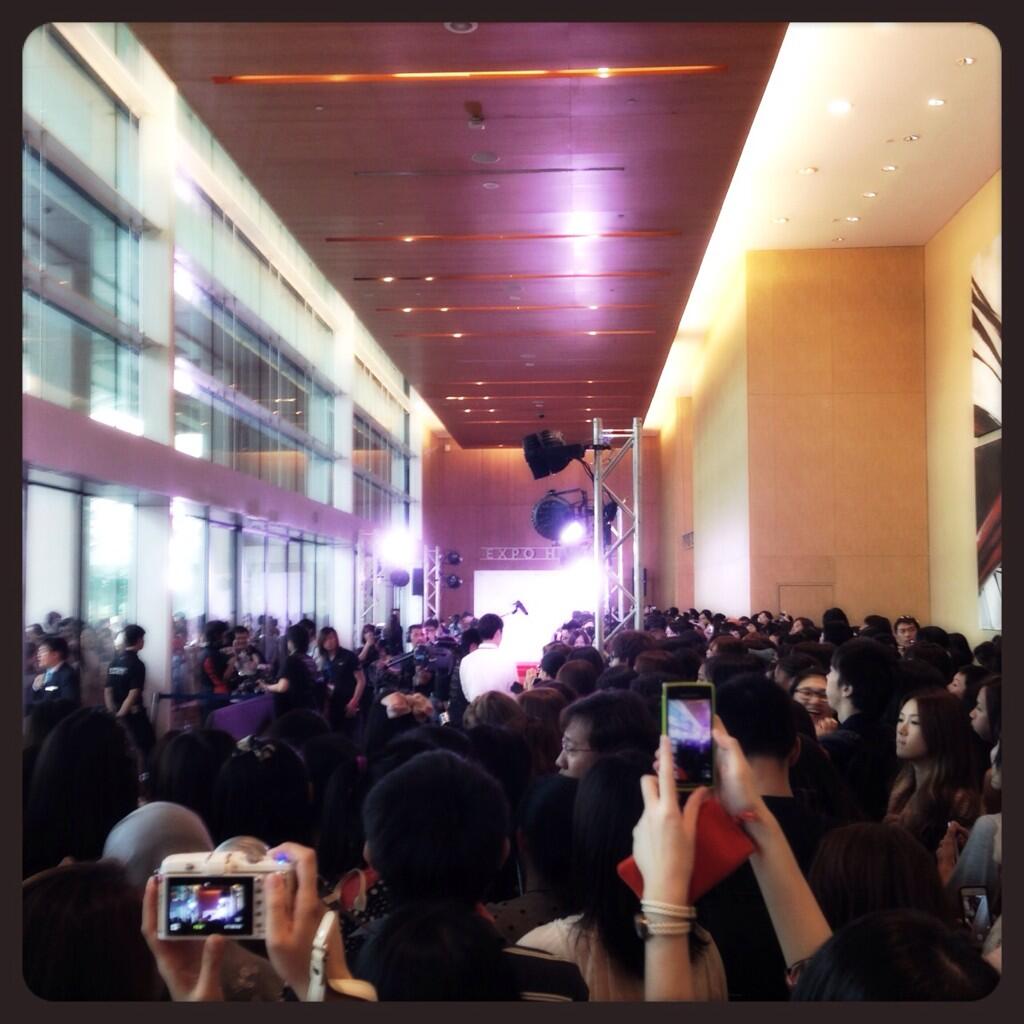
Wow... look at the crowd at the Red Carpet Event at MBS Expo.


We came too late, unable to join the other Singaporean fans along the carpet area.

But wow... there are actually quite a number of Japanese fans who flown in to catch a glimpse of the cast.

27 July 2013. 6.30pm.
They are here!!! 嵐 fans, scream!


27 July 2013. 7pm.
"謎解きはディナーのあとで After-Dinner Mysteries" started.


Packed with more punch, unexpected twist, and pockets of humour. I really enjoyed the movie. Do you remember Nodame's teacher, Franz Strezemann, the really funny guy in "Nodame Cantabile"? The actor, 竹中直人, also appears on "After-Dinner Mysteries", too, livening up the mood.

Of course, 桜井翔 looked as 格好いい as before. (Mmmm.. I think this is my first time seeing him on the big screen!)

Do remember to catch "謎解きはディナーのあとで After-Dinner Mysteries" on the big screens when it opens on 22 August!

27 July 2013. 9.20pm.
After the movie screening, Director Masato Hijikata, Sho Sakurai *scream*, Keiko Kitagawa and Shiina Kippei joined us on stage for the interview led by 杨君伟.


Ok, I take back my words. 桜井翔 looked much better in person! Though he looks very small from where I was seated. (I'm on the second floor!)


And here are some snippets for fellow 嵐 fans: (The video quality is not good, but the sound capture is not bad.)


桜井翔 greeting Singaporean fans in Singlish :D His English opening peppered with our local favourites like "alamak", "hor", and even Malay greeting "terima kasih" which means "Thank you", surprised many of us. 好亲民啊!


桜井翔 shared about his makan experience in Singapore. P.S: He seemed to like our chicken rice a lot.

This segment is in Japanese. Hence here's a fan service, by me, translated in English. Pardon any amateur mistakes. :P

I've tried the chicken rice in Singapore. *cheers from the crowd- proud of our hawker heroes!*

At a place which I think it's called Little India. It looked like a food court, somewhat like yattai (outdoor food stalls in Japan).

I sat together with the locals. There were 2 girls, one of them was eating, and I sat near them. However, no one noticed me.
*"Eh?!" from the crowd. Yeah. We can't believe no one has spotted him! He is so famous/格好いい/etc~*

*Tickled by our response* Thank you! *cheers from crowd*

It was delicious.

After I returned to Japan, I ate Singapore Chicken Rice again (in Japan). But as expected, the local one in Singapore tasted better.

If I am back in Singapore, I want to eat chicken rice again.

*looks at watch* But I think I can't (tonight).

Finally it ended with a wide-angle photo shoot of the cast and the Director with the audience.


And that marked the end of a magical night.

Btw. 桜井翔 left on a midnight flight back to Japan after the event. 真是来去如风啊。

*additional updates on 3rd Augusr 2013*

Golden Village will have having a fan screening on:
Date: 14 August 2013
Time: 7pm
Venue: GV Plaza
Complimentary: All cast poster
Price: $16 for Golden Village members and $20 for the general public
How to book: Tickets on sale here.

Other related posts:
- Catch the filming sites of "After-Dinner Mysteries" 「謎解きはディナーのあとで」の撮影場所

Jun 27, 2013

How to make Agedashi Tofu

Agedashi Tofu 揚げだし豆腐 - one of the very common dishes in a Japanese meal. This seemingly simple dish, is actually, not simple at all! Probably coupled with my lousy skills in deep frying, it took me several attempts to get it right.

Tada~ I'm now proud to present to you my successful attempt of the Agedashi Tofu~


Now, here's how to re-create it:

First, let's make the sauce that accompanies the Agedashi Tofu.

Ingredients needed

  • 250ml of Water
  • 6g of Bonito Flakes
  • 3cm by 5cm Kelp 昆布 (konbu)
  • 2 tablespoons of Rice Wine 白米酒 / Sake
  • 2 tablespoons of Light Soya Sauce / Shouyu 醤油
  • 1 tablespoon of Sugar


TIP
You might have noticed, I have replaced some Japanese ingredients with Chinese ingredients, like rice wine replacing sake, and light soya sauce replacing shouyu. Don't worry, the sauce still taste as good. :)

Method

1. Add all ingredients together into a pot.

2. Heat the mixture, until it boils.

3. Set it aside, while we continue to make the Agedashi Tofu.


Now for the main character~ the tofu~

Ingredients needed

  • 1/2 cup of Tempura Flour
  • 150ml of Ice Water
  • Some excess Tempura Flour
  • Cut Spring Onion
  • Seaweed slices
  • Chinese Tofu


TIP
It looks like silken tofu, but be careful, look for the tofu that states "suitable for frying". It usually has a picture of the Agedashi Tofu on it as well. This is because we need firmer tofu to deep fry.

Method

1. Using kitchen towels, remove the excess moisture from the tofu.

2. Mix 1/2 cup of tempura flour and 150ml of ice water to form the batter.

TIP
The temperature difference between the batter and the oil used for deep-frying will maintain the crispiness of the agadashi tofu.

3. Pour some tempura flour on a plate for initial coating.

4. Cut the tofu into cubes.

TIP
For beginners, it is easier to manage, if the tofu is cut into smaller cubes. It helps in the coating and deep frying later.

5. Coat the tofu cube with loose tempura flour. Just roll it along the plate of flour.

6. Dip the tofu cube into the batter and coat it.

7. Heat the oil. Ensure it is hot enough for deep frying. You can test the temperature by using some batter.

8. Deep fry the tofu cubes until golden brown.

9. Use kitchen towels to soak away the excess oil.

10. Add the tofu cubes into the bowl of sauce prepared earlier.

11. Serve with garnishings of cut spring onion and seaweed slices.

TIP
If you want a truly authentic Japanese experience, you can serve with grated daikon/ white radish and grated ginger. These can be mixed into the sauce for taste.

And there you have it, Agedashi Tofu.
If QQ can do it, so can you!

P.S: If you prefer chilled tofu dishes, you can try this: Chilled Tofu Topped with Spring Onion, Preserved Turnips and Century Egg, instead. :)

Other recipes of homemade Japanese food which you may like to try:


May 5, 2013

Finding Japan in Singapore ~ Makan trail ~ Sushi

Sushi is probably one of the first foods that comes to your mind when you think of Japanese cuisine.

Today, let me introduce you to a 回転すし (kaiten sushi, sushi served on conveyor belt) place in Singapore, which reminds me very much of the kaiten sushi outlets in Japan. It's especially similar to the カッパ寿司 Kappa Sushi chain, which offers affordable 100 yen sushi.

Located in Liang Court, a mall that specializes in Japanese cuisine and shops, 漁師寿司活けいけ丸 Ryoshi Sushi Ikeikemaru, is probably no surprise to local Japanese or Japanese culture lovers.


What differs from our local kaiten sushi chains like Sakae, Ichiban Sushi/ Boshi and Sushi Tei, is the variety of dishes that Ryoshi Sushi offers.

I am particularly drawn to this variety of salmon sashimi sushi. Being a big fan of salmon, I have practically tried all varieties of salmon sushi whenever I visit Kappa Sushi in Japan.


Kappa Sushi

I found it interesting that a typical salmon sushi is actually with onions and mayonnaise! Of course, Kappa Sushi also offers the one without toppings サーモン(玉ねぎ無).

The toppings actually complement very well with the salmon sashimi.

And yes, Ryoshi Sushi, offers that! It is the first restaurant that I can find in Singapore that offers this salmon sushi:


Salmon sushi with onion and mayonnaise topping

Like all kaiten sushi, Ryoshi Sushi dishes are colour coded. Prices range from $1.80 to $6.80 (before tax and service charge) per plate, depending on the colours. Green is the cheapest, while black is the most expensive. In this case, yellow plates (salmon sushi) cost $2.80.

Have you also noticed that the sashimi are usually longer than the length of the sushi rice? This is also a typical feature of sashimi sushi in Japan. But somehow, in local kaiten sushi outlets, sashimi are usually much shorter.

Other less commonly found sushi varieties which you must try are:

Queen's Crab Sushi


Probably boiled or steamed, it still retains the sweetness of the crab. There are two pieces per plate, by the way. The sushi were too tempting so I ate one, before I caught it on film. :P It is on the slightly higher end of the range, costing $5.80 per plate.

Next, do give this sakura prawns a try:

Raw Sakura Prawns


Characterised by the reddish pink flesh, these prawns are named after the sakura. Sakura prawns are one of the specialties in Izu, where Ryoshi Sushi imported most of the seafood supplies from. (沼津 Numazu is a city in Izu, Shizuoka Prefecture)

I have tried to order their tamago series, but they are always sold out on the occasions I went. Do let me know how they taste like if you have tried. I bet they must be really good.

Queues are quite long on weekends though. Do be prepared.

How to get there?
177 River Valley Road
Basement 1 Liang Court
(opposite Mediya Supermarket)


View Larger Map

Other Finding Japan in Singapore recommendations:

Apr 13, 2013

读心人?Mentalist? いるんですか?

One of my favourite hobbies when I was still in Japan was to catch the thrice-weekly dose of Arashi 嵐 via the television variety shows. Back in Singapore, it became almost impossible to catch them. But coincidentally tonight, I managed to catch a past episode of 嵐にしやがれ in Japanese.

For every episode of 嵐にしやがれ a mysterious guest will be invited to share some of their best skills/ knowledge with 嵐. It's fun, mostly because 嵐 will not know who will be invited beforehand. Hence, it is quite interesting to watch their reaction and how they rise to the various challenges as the show progresses.

Umm.. I digressed. Back to the topic. For this particular episode I watched, the guest was DaiGo. At first, just by looking at his name, I thought he would be the singer, Daigo. But nope, the guest was the mentalist, DaiGo, instead.


The first impression he gave me was.. oh.. he's a magician! But nope, he was quick to correct that he is not a magician, as a magician performs tricks to surprise people. But he performs tricks to make people relax before him, and therefore allowing him to accurately read their behaviours and subsequently their minds.

I find what he taught in the show very intriguing. Here are some tips he share, in the chronological order as the show progresses:

DaiGo commenting on Aiba's and Jun's standing postures as he watched via the monitor before he entered the set:
1. When 2 people behave very similarly, (How do they rest their hands? Posture? Where do they shift their weight?) we can tell that their relationship is very close. Most likely, they would be couples.
>> Ah.. I draw relevance to 夫妇脸. Don't they always say as the relationship grows stronger, couples tend to look alike too?

DaiGo explaining that everyone can be a mentalist like him, while performing the fork trick:
2. With observation (closely monitoring the body actions), understanding the human psych, clever use of optical illusion, physics and various science laws which he rattled on, everyone can do it.
>> Umm... seriously, I think if you give me another 100 years, I wouldn't be able to fold a fork into a flowery ornament like he did. That fork trick seriously had me thinking he must have some form of psychic power.

DaiGo commenting on why Nino gave the slip:
2. Our mouths tend to slip. Even when we consciously not speak. Unconsciously, when the particular word/ phrase is mentioned, our mouths will move slightly, hence hinting the mentalist that that is the answer.
>> Another one I have heard is about the eyeball movement when one speaks. If the person looks up towards the left, he is likely recalling a past incident, hence speaking the truth. But if he is looking towards the right, he is likely making up. Hence, telling a lie.

DaiGo sharing the meaning behind colours during the sushi guessing game:
3. Blue colour does not induce appetite; red colour is too close to the colour of tuna, hence he picked green, which contrasts best with tuna.
>> I'm going to keep a lookout for the colours used for sushi plates when I next visit a sushi restaurant!

Kusano-san commenting on how he keep his cool before DaiGo:
4. Maintain a neutral stand. (DaiGo explains, as Kusano-san is a quiz MC, he has many years experience on maintaining a neutral stand. Once he is in a work-mode, consciously and unconsciously he has discarded his thoughts and hence, guests on his show cannot guess the answers from his expression) Kusano-san also clenched his left fist tight even though his right fist is the one which held the ring. This is to give the impression that both his hands are holding something.

If the bending of fork, and eerily correct guesses of the games does not freak you out. The last game probably did for me. Without looking, he managed to guess the seating arrangement of Jun, Sho and Ono. He explained that that he did that by actually coercing them into the seating arrangement unconsciously.

That is one scary 读心人.

怖ぇ~

Mar 30, 2013

Finding Japan in Singapore ~ Makan trail ~ Oden

Sorry for the hiatus from this series: Finding Japan in Singapore. ごめね!

Recently, I found this new spot tucked in a little corner in town, which sells authentic oden! Oden is somewhat like the Japanese version of Singapore's Yong Tau Foo.

This common street food in Japan is very readily available everywhere in Japan. Especially in winter, almost all convenience shops will serve oden. However, Oden is quite hard to find in Singapore. Unlike its counterparts like sushi and ramen, there aren't that many restaurants that serve Oden.

DO YOU KNOW?
Oden is known as 關東煮 (guan tong zhu) in Taiwan.

Hence, I was quite surprised to find an izakaya (Japanese drinking bar) in Singapore that actually serves mouth-watering oden, which reminds me of Japan's.

There are lots of different choices for Oden. My favourite is the daikon. :)


And here's where you can have a bowl of piping hot oden, Orihara Shoten 折原商店. It is within 5-minutes strolling distance from the shopping mall, UE Square. (Oh, by the way, the 7-11 at UE Square is serving Oden now too. Though I have yet to try theirs.)

Address: 11 Unity Street #01-02 Robertson Walk Singapore 237995

View Larger Map

Their main business is selling sakes, both in store and take-away. Lots of varieties here. :P Being an umeshu fan, I love their series, as they have such a wide variety! My personal favourite is the yuzu umeshu.

Other than oden, I would also recommend these sides to go with your sake: grilled stingray and grilled prawns. They also serve yakitori which is supplied by the yakitori restaurant next-door.

TIP
There are very few seats indoor. Most of us stand around the bar. But you can request for foldable chairs, which they call "Priority Seats". We have to give up our seats to the disable, elderly and pregnant ladies when they step in. There are lots of outdoor seats though.

Don't forget to drop by Orihara Shoten for your 二次会 (second round of makan session)~

Other Finding Japan in Singapore recommendations:

Jul 8, 2012

How to make Sushi

Interestingly, during my one-year stint in Japan, I had never tried making sushi, nor take up any sushi making classes. Nevertheless, armed with my farewell gift from my excolleague in Japan, the recipe book "Sachiko's Japanese Cooking Lessons in English", I tried sushi-making. :)


There are 6 types of sushi in all, of which maki sushi 巻寿司 (circular in shape, with filling in the middle), nigiri sushi 握り寿司 (cylindrical with toppings) and inari sushi 稲荷寿司 (rice in sweet beancurd skin) are the most common in Singapore. This time I made futomaki 太巻, a type of maki sushi. Futomaki is larger in circumference, with 2 or more fillings.

The toughest part about sushi making would probably be the sushi rice making part. I used to think it's just cooking shorter rice grains in the rice cooker, but nope, it is actually more complex than that.

Equipment needed

  • Rice cooker
  • Rolling mat(Available at Daiso)
  • Steaming cloth (Available at Daiso)
  • Hangiri (Wide wooden tub)
  • Spatula
  • Fan
  • Sharp knife
  • Cutting mat


TIP
I did not have a hangiri, so I just used a wide porcelain bowl to substitute. This is used to mix the rice with sushi vinegar evenly. Do note has to be non-metal.

Ingredients needed

(Sushi Rice)

  • 2 cups of Short grain rice/ Japanese rice
  • 60ml Sushi vinegar (Available in Cold Storage)


(Sushi filling)

  • Omelette strips
  • Japanese cucumber strips
  • Crab meat strips
  • Pork floss
  • Fried ikan bilis
  • Seaweed (Large sheets)


Method

1. Cook the short rice grains in the rice cooker.

TIP
Add a piece of kelp with the sides cut in the rice cooker, while cooking the short grain rice to add flavour.

2. While the rice is still hot, quickly transfer them to the hangiri. Mix it with sushi vinegar. Remember while mixing the rice, to fan the rice simultaneously. This is to remove the excess moisture and to give the rice a glossy look.

TIP
If you prefer homemade sushi vinegar, you can mix 50ml of rice vinegar, 2 tablespoons of sugar and 2 teaspoons of salt to make sushi vinegar.

3. Cover the sushi rice with a damp steaming cloth once done.

4. Place the rolling mat, such that the flat side is facing downwards. Place a piece of seaweed on top, with the smooth side facing downwards.

5. Distribute sushi rice evenly on the seaweed, leaving about 1-2cm of circumference free.

6. Add the filling on the rice, leaving about 3cm free from the top and bottom of the rice area.

TIP
The filling ingredients above are just some suggestions. Be creative! I had fun mix-matching the ingredients.

7. Roll the sushi. Remember to tighten it, so that the roll will be firm.

8. Cut the maki sushi roll.

TIP
If you are a beginner like me, it helps to cut the sushi thicker. It is easier to manage :P

And there you go, sushi~

With my mum's help, we took 2 hours to complete our maki sushi project- 4 rolls in all. Lots of fun~ Have fun making sushi, too!

Other recipes of homemade Japanese food which you may like to try:

May 14, 2012

Finding Japan in Singapore ~ Makan trail ~ Cakes at Kki

Thank you for your patience, fellow foodies!

Here's the second installment of the "Finding Japan in Singapore ~ Makan trail". :)

This time, let's go for some sweet treats- cakes!

When I was in Japan, I often go on bike rides to track down cafes, as I simply love Japanese cakes. Somehow the cream they use is lighter, and it is relatively less sweet. And of course not forgetting, they can be so cute at times!


Sorry! This is not available in Singapore. It's from Sugarpot in Hamamatsu. Nevertheless, I am still on a lookout for similar cafes in Singapore.

Kki is a nice little, zen cake shop nestled at Ang Siang Hill. It is owned by a Japanese-Singaporean couple. The pâtissier is a true blue Japanese pastry chef, hence the authentic sweet treats from Japan.

"Kki" is probably inspired by the word ケーキ (ke-ki) which means cake in Japanese.


Mont Blanc- the classic


Little Red Riding Hood (there's a raspberry filling inside!)


Fromage Melon = Melon Cheese Cake


Antoinette ~ White chocolate with a tinge of mango

Like the shop decor, the cakes' decor is at a minimal, very classic, very zen.

Prizes range from $6+ to $8+.

They serve tea as well. But there are limited seats in the cafe, as they co-share the space with The Little Drom Store, a nice shop selling retro knick-knacks.

A nice hangout for afternoon tea while you are in the vicinity:

View Larger Map

Address: 7 Ann Siang Hill, Singapore 069791

It's Kki time!

Other Finding Japan in Singapore recommendations: